Does a Root Canal Hurt? What Scottsdale Patients Actually Experience



Fear of pain is the number one reason people put off a root canal — sometimes for months. That delay usually makes things worse. So let’s answer the question directly: does a root canal hurt? For most patients at North Scottsdale Endodontics, the honest answer is no — and modern endodontic care is a big reason why.
If you’re searching for answers after waking up with a throbbing tooth, or your general dentist just referred you to a specialist, you’re in the right place. Here’s what root canal treatment in Scottsdale actually involves, what you’ll feel during and after the procedure, and why the fear of pain is usually far worse than the procedure itself.
Why Root Canals Have Such a Bad Reputation
The root canal’s reputation for being painful is outdated — rooted in an era before modern local anesthesia, digital imaging, and minimally invasive techniques. Most people who say root canals are terrible either heard it secondhand or had a procedure decades ago.
Here’s the reality: the pain you feel before a root canal — the deep aching, the sensitivity to hot and cold, the pressure that wakes you up at night — that’s caused by the infection inside the tooth, not by the treatment. The procedure is designed to eliminate that source of pain, not create new pain.
You can read more about the most common misconceptions on our root canal myths and facts page — it covers a lot of the concerns patients bring up at their first visit.
What Does a Root Canal Actually Feel Like?
There are two distinct experiences to talk about: during the procedure and in the days after.
During the Procedure
Before anything begins, your endodontist will thoroughly numb the area with local anesthesia. You may feel a brief sting from the injection — similar to any dental shot — but once the anesthetic takes effect, the tooth and surrounding tissue should be fully numb.
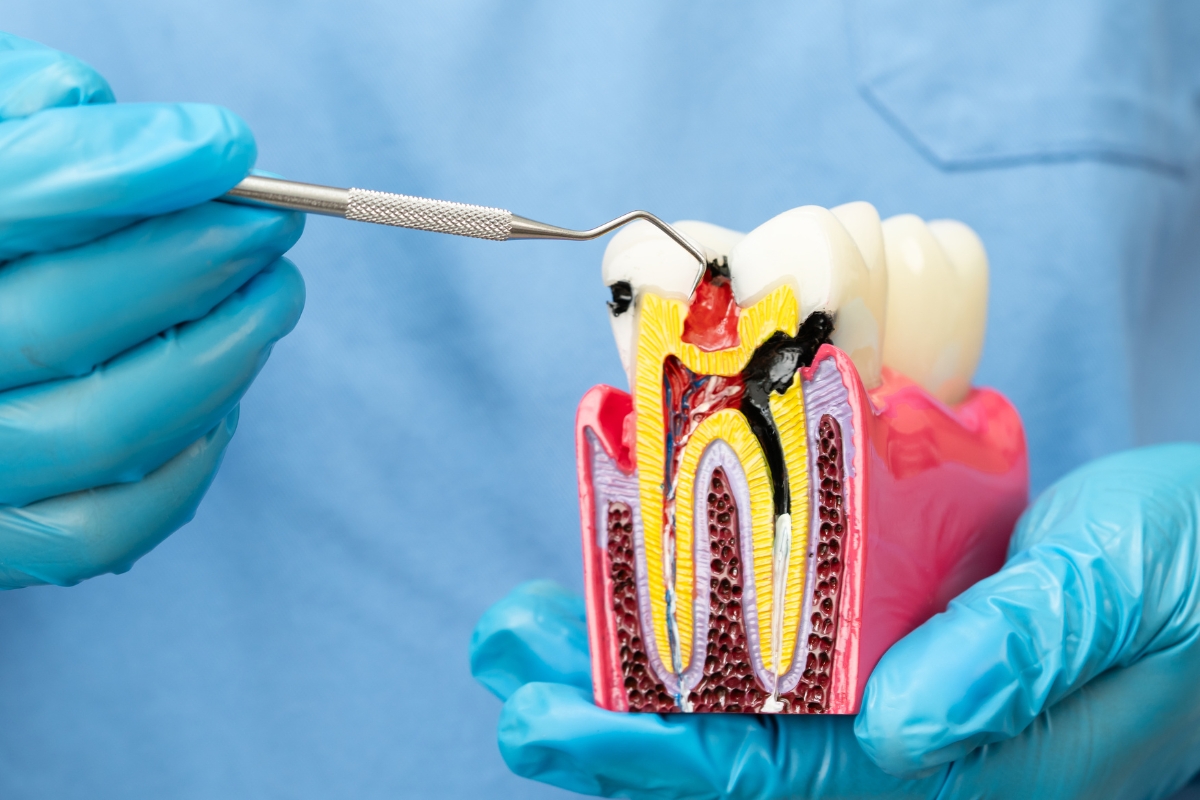
Most patients report feeling pressure and movement but not pain. If at any point you feel sharp discomfort, the procedure can be paused and more anesthesia administered. At North Scottsdale Endodontics, the goal is a comfortable experience from start to finish — that’s not a marketing line, it’s the standard of care Dr. Susan Wood and Dr. Thomas McClammy hold themselves to. The procedure itself involves removing the infected pulp tissue from inside the tooth, cleaning and disinfecting the root canal system, and sealing the space to prevent reinfection. Most appointments take between 60 and 90 minutes. Complex cases may require a follow-up visit, but your endodontist will explain that upfront.
| Technology note at North Scottsdale Endodontics |
| The practice uses the GentleWave System — an advanced technology that uses broad-spectrum acoustic energy and procedure fluids to clean root canal anatomy, including microscopic spaces where bacteria can hide. It replaces much of the traditional instrumentation, which means less drilling, more thorough disinfection, and a more comfortable procedure overall. |
After the Procedure
Some soreness and mild sensitivity for two to three days after the procedure is normal. The tissue around the tooth was inflamed before treatment, and it needs time to settle. Over-the-counter pain relievers like ibuprofen are usually enough to manage this. Most patients return to their normal routine the same day — there are no driving restrictions, and most people go back to work without issue.
If you experience significant or worsening pain after a few days, contact the office. That’s not a typical part of recovery, and it warrants a follow-up.
How to Know If You Might Need a Root Canal
Not every toothache means you need root canal treatment. But certain symptoms suggest the pulp inside your tooth may be infected or damaged:
- Severe, persistent toothache or throbbing pain
- Prolonged sensitivity to heat or cold that lingers after the source is removed
- Darkening or discoloration of a tooth
- Swelling or tenderness in the surrounding gum tissue
- A recurring pimple-like bump on the gum near a tooth
If any of these sound familiar, it’s worth getting evaluated sooner rather than later. You can learn more about warning signs in our guide to symptoms that may indicate a root canal.
Why Seeing an Endodontist Matters
A root canal performed by an endodontist is different from one done at a general dental office. Endodontists complete two to three additional years of specialty training beyond dental school, and their entire practice is focused on diagnosing and treating conditions involving the dental pulp and root canal system.
At North Scottsdale Endodontics, Dr. Wood completed her endodontic residency at Boston University Goldman School of Dental Medicine, and the practice is equipped with state-of-the-art digital imaging that reduces radiation exposure by up to 90% compared to traditional x-rays. Specialists see these cases every single day — which translates to efficiency, accuracy, and a more comfortable outcome for patients. You can learn more about the full scope of endodontic care on our endodontics services page.
What Happens If You Delay Treatment?
A tooth infection does not resolve on its own. Without treatment, the infection will spread — into the surrounding bone, into adjacent teeth, and potentially into the bloodstream. What starts as a manageable root canal can become an extraction. And replacing a tooth costs significantly more, both financially and in terms of long-term dental health, than saving it.
The short-term discomfort of a root canal procedure is far preferable to the alternative. If you’re in pain right now, North Scottsdale Endodontics offers same-day emergency appointments for patients who need prompt care.
The Bottom Line
Does a root canal hurt? With modern techniques, quality anesthesia, and a skilled endodontist, most patients are surprised by how manageable the experience is. The pain you’re feeling now — from the infection — is almost certainly worse than the procedure that removes it.
Scottsdale patients trust North Scottsdale Endodontics because the team is genuinely focused on making root canal treatment as comfortable as possible, using advanced technology and a patient-first approach. Don’t wait until the pain becomes unbearable.
| Schedule Your Consultation |
| If you’re experiencing tooth pain or have been referred for root canal treatment in Scottsdale, we’re here to help. Same-day emergency appointments are available. Call North Scottsdale Endodontics: (480) 378-0714 |
FAQs
Q1: Does a root canal hurt during the procedure?
No. Your endodontist will use local anesthesia to fully numb the tooth and surrounding tissue before any work begins. Most patients feel pressure and movement but no sharp pain. If discomfort occurs, additional anesthesia can be administered. The infection that led to the root canal is typically far more painful than the procedure itself.
Q2: How long does a root canal take?
Most root canal procedures at North Scottsdale Endodontics are completed in a single appointment lasting 60 to 90 minutes. Complex cases or teeth with unusual anatomy may require a second visit, which your endodontist will discuss during your initial evaluation.
Q3: What can I expect after a root canal?
Mild soreness and sensitivity for two to three days is normal as the surrounding tissue heals. Over-the-counter anti-inflammatory medications like ibuprofen typically manage this well. There are no driving restrictions after the procedure, and most patients return to normal activities the same day.
Q4: Is it better to get a root canal or have the tooth pulled?
Preserving your natural tooth is almost always the preferred option. Root canal therapy saves the tooth’s root structure, maintains your bite alignment, and avoids the cost and complexity of replacement options like implants or bridges. Root canal therapy at a specialist’s office has a high long-term success rate.
Q5: How do I know if I need a root canal or just a filling?
A filling is typically sufficient for surface decay that hasn’t reached the pulp. Root canal treatment becomes necessary when the pulp itself is infected or inflamed — usually signaled by persistent severe pain, prolonged sensitivity, swelling, or a darkened tooth. An endodontist can confirm the diagnosis with digital X-rays and a clinical exam.