

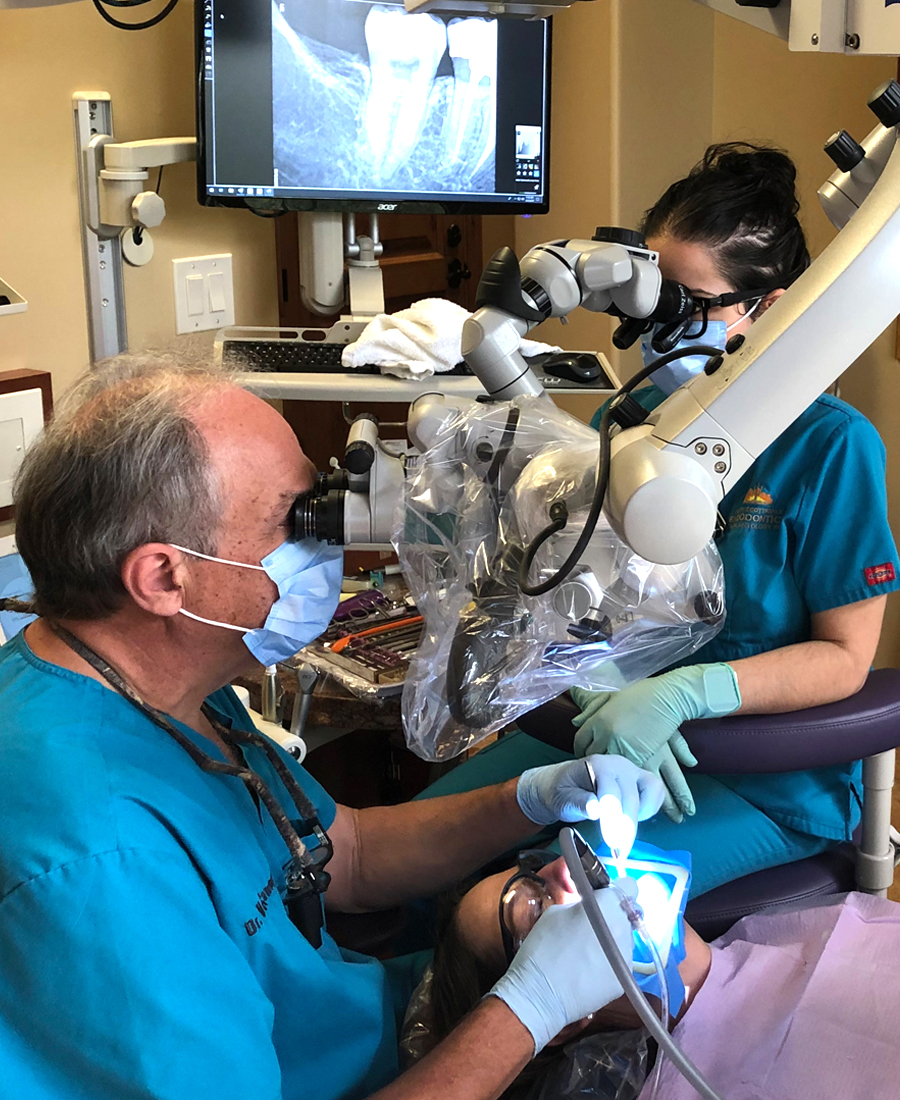
Apical Microsurgery (apicoectomy)

Image

When Root Canal Treatments Fall Short

In rare cases, primary endodontic treatment may not work as expected and Inflammation or infection persists in the bony area around the end of a root after a root canal procedure. There are many reasons why this procedure could be necessary:
  1. Sometimes calcium deposits make a canal too narrow for the cleaning and shaping instruments used in non-surgical endodontic treatment to reach the end of the root
  2. Diagnosing persistent symptoms that cannot be diagnosed by standard dental imaging, such as tiny fractures or microscopic accessory root canals
  3. To treat damaged root surfaces or surrounding bone
New Patients & Emergency Appointments Welcome!

PERFECT SMILE


Image

we take pride

01

Why A Root Canal?

A root canal is the treatment of choice in order to save a tooth that would otherwise die and need to be extracted. Many patients believe that removing the problematic tooth is the solution, but in reality, extracting a tooth may cause significant problems for adjacent teeth, and ultimately be more costly.
02

Signs & Symptoms

You may need a root canal if you have any of the following symptoms:

  • An abscess on the gum
  • Sensitivity to hot or cold
  • Severe toothache pain
  • Swelling and/or tenderness

 It’s important to remember that some people who need a root canal may never have any symptoms. That’s why regular checkups with your general dentist are so important.

03

Treatment

A root canal procedure is typically performed by an endodontist (root canal specialist). The procedure begins with numbing the tooth, then opening the top of it in order to access and clean. Dr. McClammy is well-versed on the latest root canal techniques and uses the GentleWave® system to clean the tooth’s root system more efficiently, with less pain and a lot less chair time than the older, more traditional technique. Once the tooth is thoroughly cleaned, the roots are filled and sealed with a rubber-like material called gutta-percha.Dr. McClammy then places a temporary filling to cover the opening on top of the tooth until a crown can be placed. The crown will protect the tooth and prevent the root canal from breaking while restoring it to its full function.

After treatment, your tooth may be sensitive, but this will subside as the inflammation diminishes and the tooth has healed.

04

Retreatment

The first step in a root canal retreatment is to administer a local anesthetic. Next, Dr. McClammy will gain access to the inner tooth by removing any crown or post that has been placed. He will then remove the filling material and obstructions that block the root canals by using an ultrasonic handpiece that vibrates loose any unwanted material. Tiny, specialized instruments will then be used to clean and reshape the root canals. When Dr. McClammy is confident the root canals are completely clean, he will pack the space with gutta-percha. This rubbery material seals the canals to prevent bacterial invasion. Finally, a temporary crown or filling is applied to tooth. Your general dentist will make a crown for the tooth, if needed. Many times the existing crown can be saved and a permanent filling is used to fill in the access opening.

Technology


Image

The GentleWave Alternative

Technology That Saves Teeth

01

A One-Session Procedure.

In most cases, a GentleWave Procedure can be completed in just one session. In addition, because GentleWave technology is so effective at cleaning and disinfecting the root canal system, there's less chance of failure over time
02

Minimally Invasive1

Unlike standard root canal treatment, the GentleWave Procedure replaces much of the instrumentation with a vortex of procedure fluids. Many patients—especially those who have undergone standard root canal treatments in the past—describe the experience as comfortable.
03

A Higher Standard of Clean

The GentleWave System’s broad spectrum acoustic energy enables fluids to travel through your root canal system, removing tissue and disinfecting complex anatomies and the microscopic spaces where bacteria can hide.